
A failing water line is one of those problems that usually doesn't announce itself loudly. You might notice your water pressure isn't quite what it used to be, a damp patch in the yard that won't dry out, or a water bill that suddenly looks wrong. Then you start asking around, and the first question almost everyone has is the same: how much is this going to cost?
The honest answer is that it depends. Water line replacement pricing varies based on the length of the line, the depth of the pipe, the material being replaced, what's sitting on top of it (driveway, landscaping, mature trees), and how the line gets dug up. This article walks through the realistic ranges for Cherokee County, what actually drives the price up or down, and how to think about repair versus replacement if you're trying to figure out which makes sense for your home.
Typical Water Line Replacement Cost Ranges
Here's a realistic breakdown of what most homeowners in Cherokee County and surrounding North Georgia areas can expect to pay:
These are ballpark industry ranges, not Fast Drains-specific quotes. The right number for your home depends on the specifics of your line, which is why a real inspection is the only way to get an accurate price.
What Actually Affects the Cost
Every water line job is different. Two homes on the same street can have wildly different prices for what sounds like the same problem. Here's what's actually driving the variation.
Where the Damage Is Located
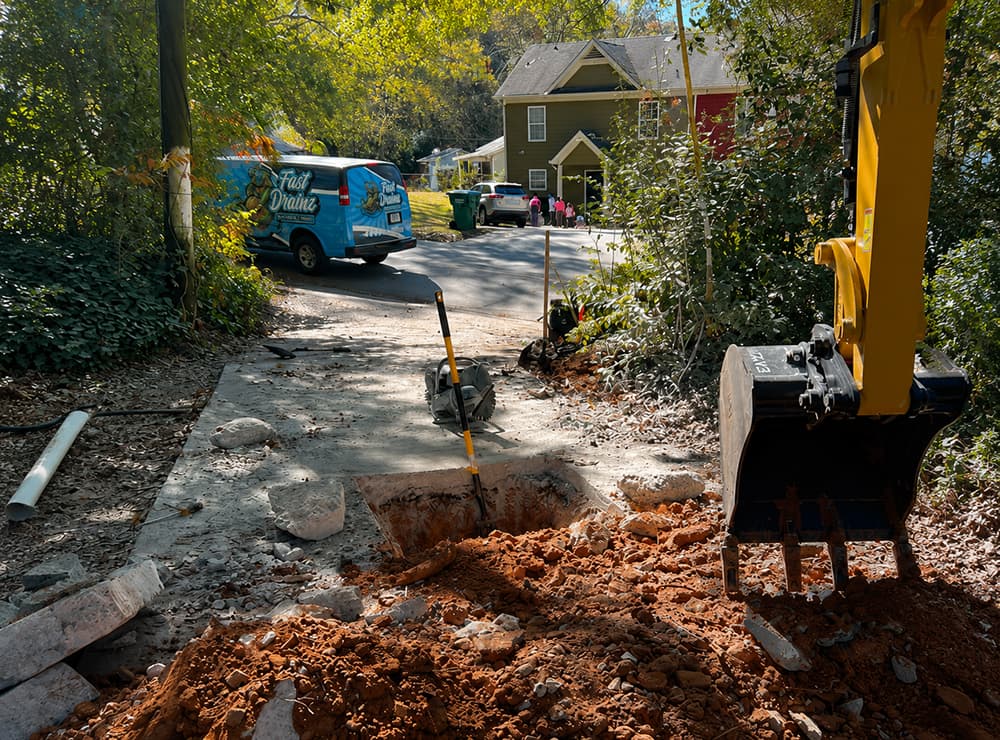
A leak in the middle of an open front yard is usually the easiest scenario. The crew can dig, repair or replace, backfill, and be done. The price goes up fast when the line runs under a driveway, a patio, mature landscaping, or a finished walkway, because everything that comes up has to go back down, and concrete or pavers add real labor and material cost on the restoration side.
The Type of Pipe Material
What your old line was made of, and what you're replacing it with, both affect the price:
- Copper is durable and long-lasting but on the higher end for material cost
- PEX has become a popular middle-ground option, flexible and reliable, often used for full repipes
- PVC is the lower-cost option, common for outdoor service lines
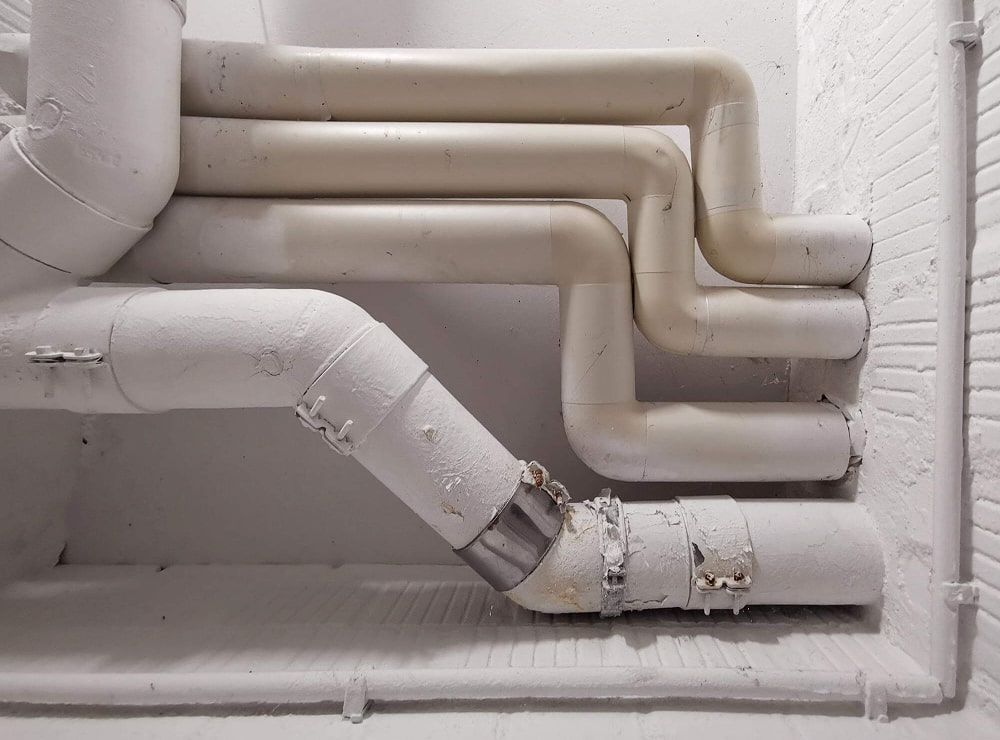
- Galvanized steel is what we often find in older Cherokee County homes, and replacing it isn't optional once it starts failing because the corrosion only gets worse
A lot of the homes in this area built in the 80s and 90s are starting to hit the age where their original plumbing is reaching the end of its useful life. We've done several full repipes in the Cherokee County area over the last few months alone, all for homeowners whose original equipment had simply aged out. It's not unusual. It's just what happens to plumbing systems eventually.
Depth and Accessibility
Shallow lines are easier and cheaper to get to. Deep lines require more excavation, heavier equipment, and sometimes additional safety considerations like shoring. The deeper the line, the longer the job takes and the more it costs.
How Bad the Damage Is
A small, localized leak on an otherwise sound line can often be fixed with a targeted repair, which is much cheaper than a full replacement. But if a line is failing in multiple spots, has been patched repeatedly, or is made of a material that's reaching end-of-life across the whole run, you're looking at replacement, not repair. Spending money to patch a line that's going to fail again in six months isn't actually saving anything.
Whether It's an Emergency
Same-day or after-hours water line work usually costs more than a scheduled job. That's true for almost any home service trade. If your line is actively leaking and damaging the property, the math usually still favors getting it handled fast, but it's worth knowing the cost difference is real.
Trenchless vs. Traditional Excavation
There are two main ways to replace a water line:
- Traditional excavation means digging an open trench along the line of the pipe. Lower cost per foot up front, but more landscape disruption to restore afterward.
- Trenchless methods like pipe bursting or directional drilling cost more per foot but require minimal digging, which means less restoration work afterward.
The total project cost is often surprisingly similar between the two once restoration is factored in. Trenchless is usually the better call when there's expensive landscaping, hardscaping, or driveways on top of the line. Traditional is often fine for open yard runs.
When Repipes Become Necessary
Some homes need more than a single line replacement. A full repipe means replacing the entire water distribution system inside the home, not just the service line coming in from the street.
This usually becomes necessary when:
- The original plumbing has reached the end of its life span (often 40-50+ years for galvanized, 50+ for copper)
- Leaks are showing up in multiple places, suggesting a system-wide failure pattern
- Water quality is consistently off (rust, sediment, weird taste) and it's coming from the pipes themselves, not the water source
- A home inspection has flagged the entire system as compromised
These bigger jobs sometimes involve cutting into walls or ceilings to access the lines, which is where partners like Hampton Restoration Group come in. They handle the cabinetry, drywall, and finish work after we're done with the plumbing side, so the homeowner doesn't have to coordinate two separate trades or end up with a half-finished kitchen. It makes the whole process a lot less painful for the customer.
Repair vs. Replace: How to Think About It
The basic logic for deciding between repair and replacement is:
Repair makes sense when:
- The damage is in a single, localized spot
- The pipe is relatively new and otherwise in good condition
- It's a first-time issue, not a repeat
Replacement makes sense when:
- The pipes are 40-50+ years old
- You've had multiple leaks in different spots
- The pipe material is known to be at end-of-life (galvanized, old polybutylene)
- A targeted repair has already failed once
Replacement is more expensive up front, but it's almost always the cheaper option if the alternative is a string of repeated repair calls and water damage cleanup over the next few years.
How to Get an Accurate Number for Your Home
A blog post can give you ranges, but it can't tell you what your specific job will cost. The only way to get an accurate number is to have someone come out, look at the line, and quote it based on what they actually see. For over 25 years, Fast Drains Plumbing has been doing exactly that for homeowners across Cherokee County, Canton, Woodstock, Holly Springs, Ball Ground, and the surrounding North Georgia communities. We offer free inspections, a 100% satisfaction guarantee on every job, and more than 150 five-star Google reviews from local customers.
If you've noticed pressure dropping, wet spots in the yard, or a water bill that doesn't make sense, give us a call at 470-680-7863 and we'll come take a look. No pressure, no guessing.
Frequently Asked Questions
Q: How long does a water line replacement take?
A: Most residential water line replacements take one to three days, depending on the length of the line, the depth, and what kind of restoration work is needed afterward. A simple open-yard run can often be done in a single day.
Q: Can tree roots actually break a water line?
A: Yes. Tree roots are one of the more common causes of water line damage in older Cherokee County homes. Roots find their way into joints and small cracks, and over time they can fully restrict flow or crack the pipe.
Q: How do I know if I have a water line leak?
A: The most common signs are dropping water pressure, wet spots in the yard that don't make sense, a water meter that keeps running when no water is being used inside, and an unexplained jump in your monthly water bill.
Q: What's the difference between a repair and a repipe?
A: A repair fixes a single spot on a line. A repipe replaces the entire water distribution system inside the home. Most homeowners only need a repipe when the original plumbing system has reached the end of its useful life.
Q: Can a water line be replaced without tearing up my yard?
A: In many cases, yes. Trenchless methods like pipe bursting and directional drilling can replace a line with minimal digging. It costs more per foot than traditional excavation, but it often pays for itself in saved landscaping and restoration work.
Q: Do you offer free water line inspections in Cherokee County?
A: Yes. If you're not sure what's going on, we'll come out and take a look at no charge. If a repair or replacement is needed, you get a clear quote up front before any work starts.